

Substack vs Beehiiv vs Ghost
A comparison after using all three.

I’ve used all three of these platforms. Not briefly, not as a test. I run publications on each of them right now and have for a while. I was recently looking for an in-depth comparison online and honestly couldn’t find one that wasn’t surface level or written by someone who tried each platform for any longer than a week. So here’s mine.
This isn’t a feature-by-feature breakdown. It’s what I’ve actually experienced with each of these platforms over the past few years.
Substack

Substack was the first platform I used. The social features are genuinely good and if your content catches fire, the growth potential is higher than anything beehiiv or Ghost can offer. The problem is that’s a big “if.” It works like any social platform. Post consistently, engage with others, and your odds go up. But engagement farming is a growing problem like any other social platform. More people are starting to treat it like a second Twitter.
I constantly see posts of “Hey Substack, connect me with people under 1,000 subscribers”, knowing damn well they won’t read anyone else’s content.
What Substack does better than anyone is put content in front of readers who are already in a paying mindset. Their discovery engine and social layer create a network effect that the other two platforms simply don’t have. If you write something great on beehiiv, it goes to your list. If you write something great on Substack, it could find its way to thousands of people who’ve never heard of you.
Monetization
Monetization on Substack is more limited than the other two in terms of channels. They take a 10% cut on paid subscriptions, which sounds steep but I actually don’t think it’s unreasonable when you consider they handle email sending for free for everyone. That’s expensive infrastructure and someone has to pay for it. I’ve heard they’re experimenting with an ad network similar to beehiiv, which could change the equation significantly if it materializes.
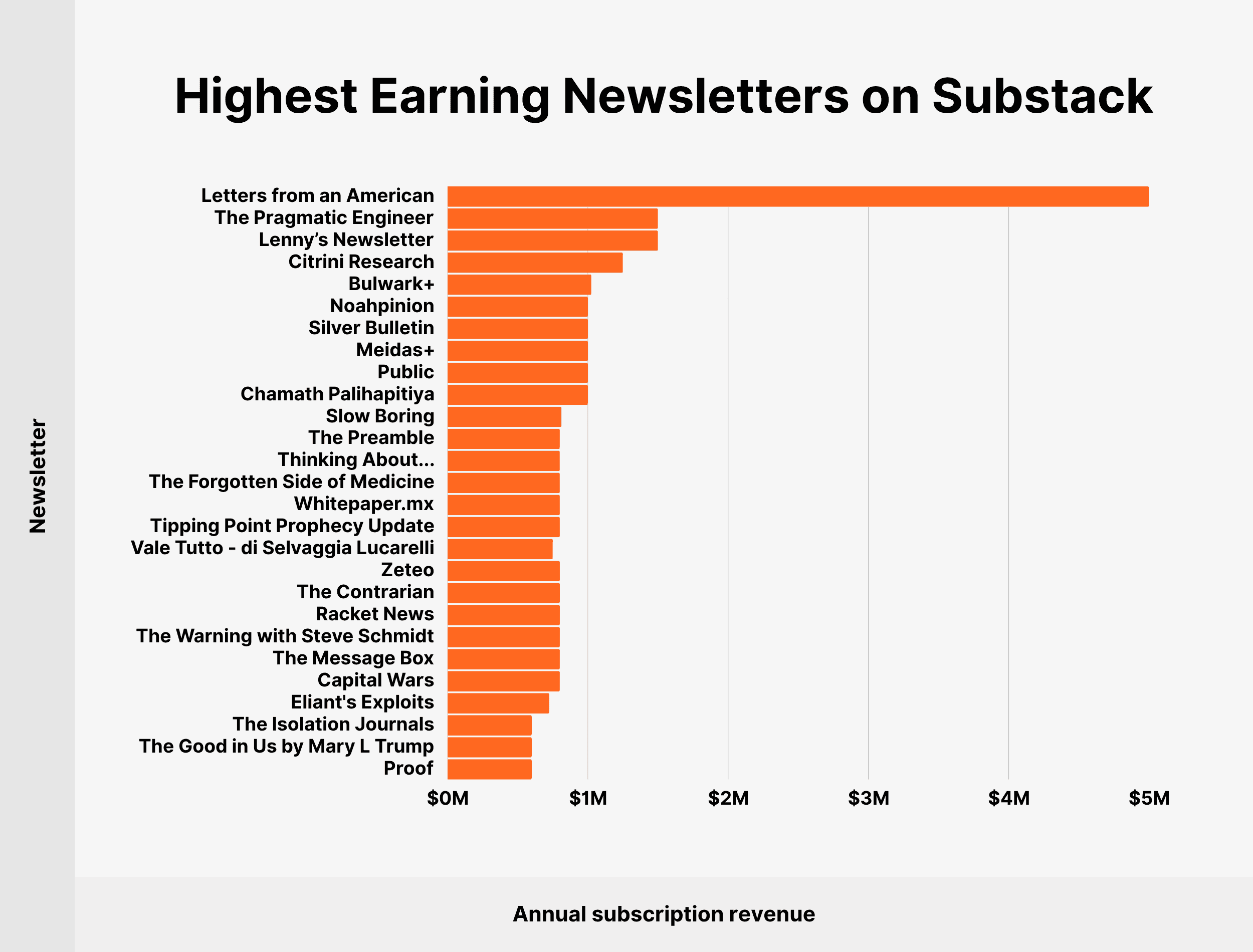
Here’s my take though: the conversions on Substack are fundamentally different and better. People on Substack are more inclined to pay. We’ve been in the market recently looking at Substacks to potentially acquire and the numbers are surprising. One guy was making $400K ARR charging $60/month, with basically no systems or processes in place. Just writing his thoughts whenever he felt like it. That kind of thing doesn’t really happen on other platforms. Survivorship bias, granted. But the point stands.
The reason is that paid content subscriptions don’t work like SaaS. A lot of people convert because they found one article they really wanted to read and thought “I don’t mind paying 20 bucks for this.” Others subscribe as a way of committing to content they enjoy. Unless your newsletter is consistently delivering something actionable, most of those subscribers won’t stick around forever. But the initial conversion is easier on Substack than anywhere else.
So the 10% fee looks different depending on your situation. If you already have strong distribution and can drive paid conversions on your own, 10% is indeed a cost. But if Substack’s ecosystem is the reason people are finding and paying for your content in the first place, it’s more like a distribution fee. And a reasonable one at that.
Branding
My biggest frustration with Substack is that it’s not a platform for building a strong media brand. It’s a platform for publishing content with minimal friction and putting it in front of readers. Every Substack looks the same. You can’t even add a profile picture to your emails so they stand out in someone’s inbox. And because readers tend to subscribe to a lot of newsletters on Substack, even when they open your email, the odds of them actually reading it carefully are lower.
Believe me, I’ve tried to find a work around. I even found a loop hole to add profile pictures to your emails on Substack through email aliases and wrote a popular guide on it, but it no longer works.
This is a strategic issue if you’re thinking long term. A media brand is more than content. It’s how the content is packaged, how it feels to interact with, how recognizable it is across channels. Substack collapses all of that into a standardized template. That works fine for personal writers who are the brand themselves, but if you’re building something bigger than your own name, it becomes a limitation pretty quickly.
Especially given how easy it is these days to produce content, branding matters more than ever. People need to remember who you are and why they should care. Substack currently provides a killer social platform: get seen and own your audience. But it’s arguably not for serious media brands.
