

An email-first social media
Substack is quietly building the most important platform in independent media.

Friends,
I recently spent a good amount of time deciding where to host this publication. It sounds like a small decision but if you run media companies for a living, you know that platform choice shapes everything downstream: your economics, your distribution, your relationship with your audience, and ultimately whether you’re building leverage.
I landed on Substack. And because I tend to overthink things, that decision turned into a full-blown analysis of the company, its business model, where it’s headed, and how to best position yourself. So instead of keeping all of that thinking to myself, I figured I’d share it.
In this letter (est. 3800 words)
Substack’s 10% model looks simple but $220M in funding and a $1.1B valuation tell a different story. Where is the money going?
They’re not building a newsletter platform anymore. They’re building an email-first social media
What Substack gets right: badges, gamification, and the ecosystem dynamics most creators overlook
Why multiple touchpoints matter more than email alone, and how paid subscription psychology actually works
The social media lock-in playbook and why migration is harder than it sounds
What Substack gets wrong and what they should fix
Untapped revenue avenues that could change the Substack’s economics
Would I invest in Substack?
The first thing you notice when you dig into Substack’s numbers is how deceptively simple the business looks on paper. They take 10% of what creators earn through paid subscriptions. That’s it. No SaaS fees, no advertising revenue (potentially changing), no enterprise contracts. If writers make money, Substack makes money. If they don’t, Substack doesn’t either.
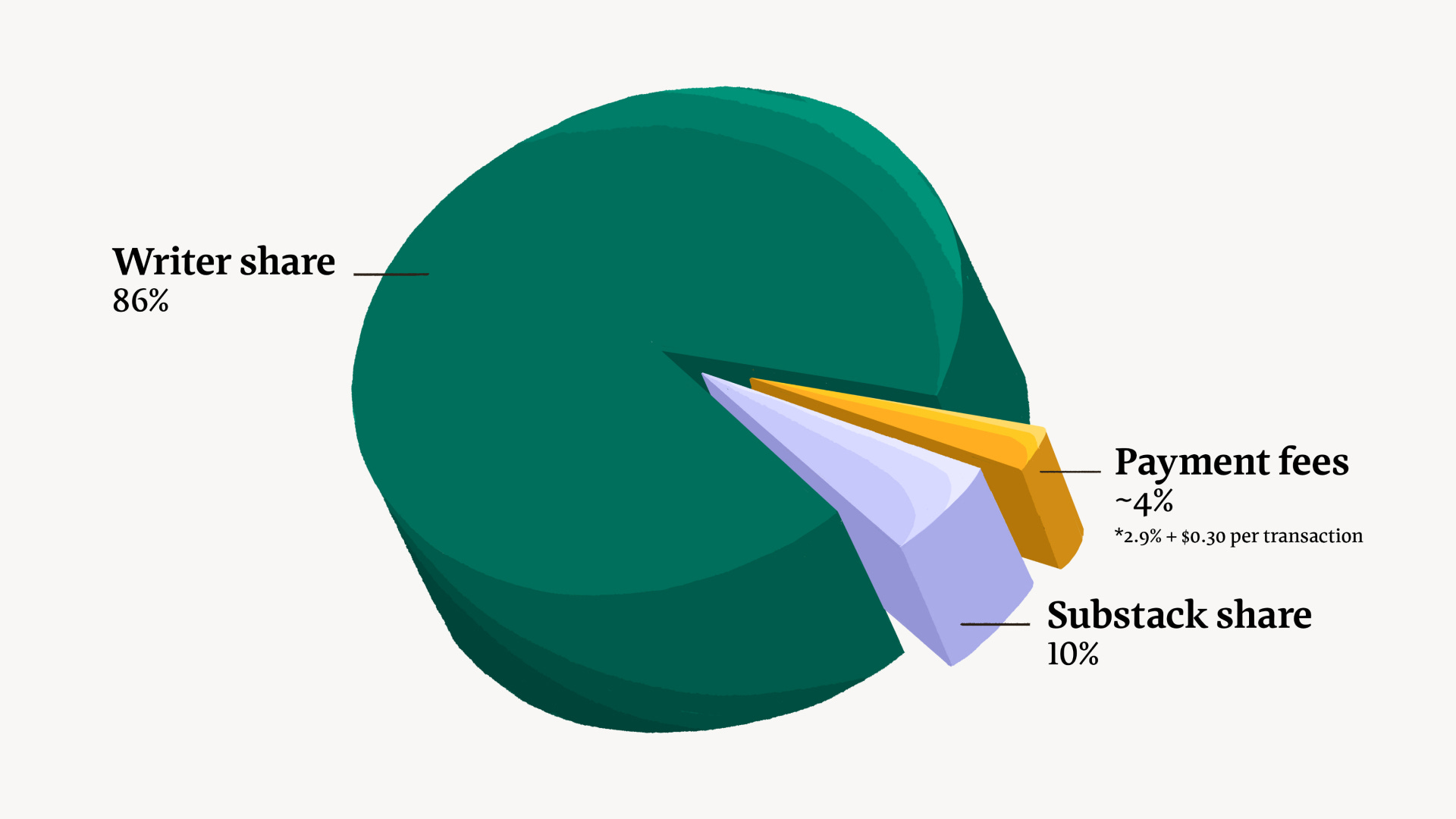
The alignment sounds elegant. And in many ways it is. Compare Substack’s 10% to YouTube taking 45% or app stores taking 30%, and the deal looks generous. Creators know this, which is why the platform has attracted some serious editorial talent.
Substack raised $100 million in July 2025 at a $1.1 billion valuation. They’ve raised $220 million in total. Their estimated annualized revenue is around $45 million, based on roughly $450 million in gross writer revenue flowing through the platform. So, where is all this money going?
Email, first.
Substack is not building a newsletter platform. Not anymore. They’re building an email-first social media company.
That distinction matters enormously. A newsletter platform is infrastructure. You write, it sends. The value is in reliability and deliverability. An email-first social media company is something entirely different. It’s a network where the content happens to arrive in your inbox but the engagement, the discovery, the community, and increasingly the consumption happens inside an app and a social feed.
Look at what Substack has built in the last three years.
Notes, which functions like a Twitter alternative for long-form thinkers.
An app that now drives more subscriptions than the recommendation engine (roughly 3 million per month from the app versus 2 million from recommendations).
Chat features for community building.
Podcast hosting.
Video and streaming features.
Substack TV is in development.
They’ve even started experimenting with advertising, something the founders resisted for years.
They’re no longer competing with Beehiiv or Mailchimp or Ghost. They’re competing with Medium, Twitter, Spotify, and arguably Patreon, all at once. Substack is newsletters, blogging, microblogging, podcasting, live streaming, and a payment layer, bundled into a single platform with a social graph on top.
The $100 million makes more sense now. You don’t build a social media platform on the revenue from a 10% take rate alone. You invest ahead of the growth, betting that the social network becomes sticky enough to justify the spend.
What Substack gets right
And it’s more interesting than most people give them credit for.
When you join as a creator, Substack has already spent a great deal of time and resource doing the tough thinking for you.
One of my favorite features is auto-paywalling older posts after a certain period of time. This essentially means: if you’re a subscriber, indulge away. If not, pay the price for being late.
5 years ago, this was a strategy only a top-tier media company could implement.
The paid subscription badge is another small feature that reveals sophisticated thinking about the platform.
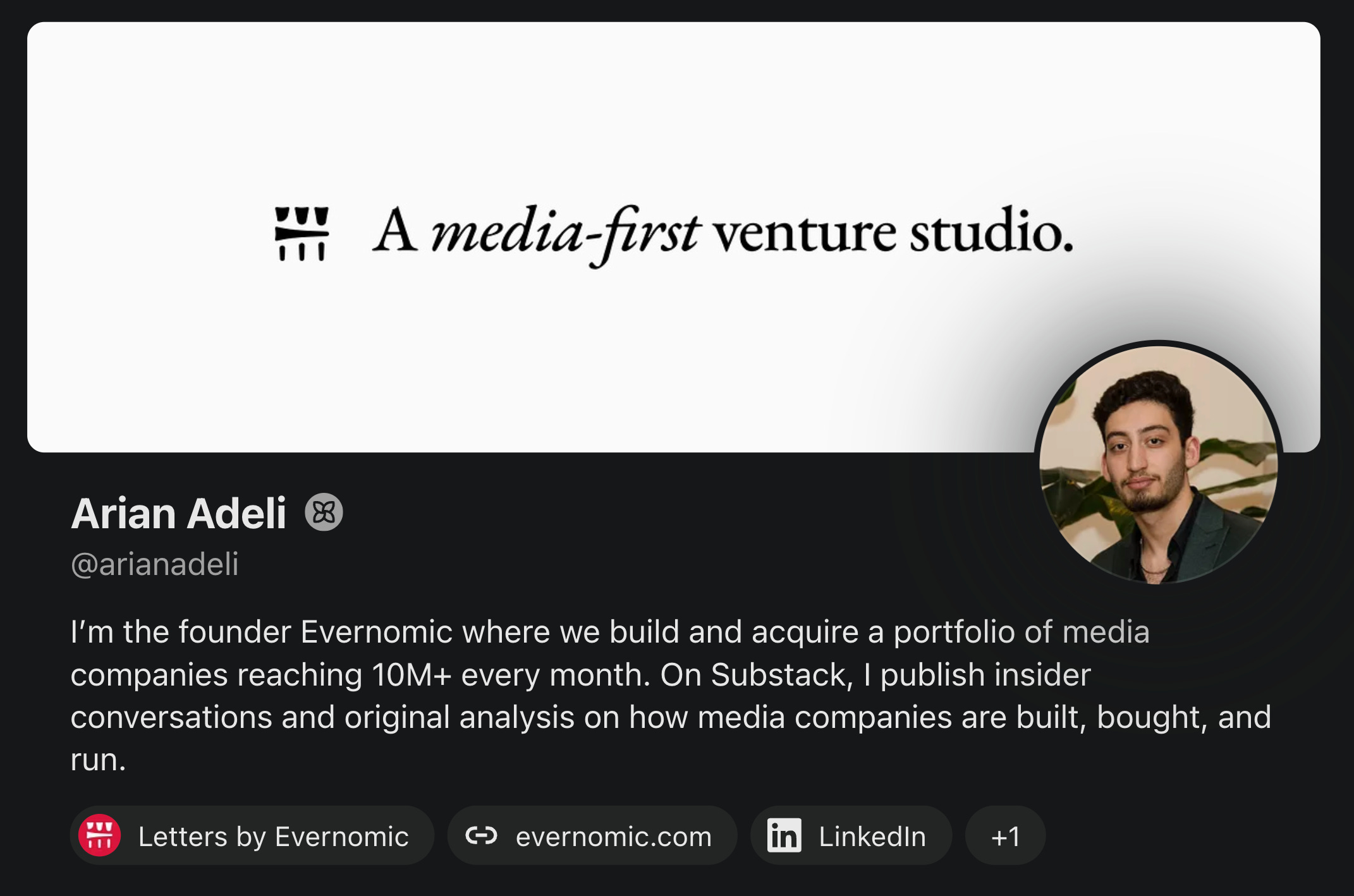
Substack adds a gray badge next to the names of people who subscribe to paid newsletters. It’s a status signal, similar to the blue checkmark on X. For creators, it’s a visible differentiator. For readers, it’s an incentive to pay for at least one newsletter, even if it’s not one they particularly need, just to get the badge.
I actually read my paid subscriptions but, heck, I’d pay just to get the badge.
